USD
USD 
TOS Trenčín cross slide screw and nut replacement
A worn cross slide screw and nut is one of the most common causes of backlash, inaccurate dimensions and poor surface finish on TOS Trenčín SN lathes. As wear increases, precise positioning of the carriage becomes difficult and machining accuracy gradually deteriorates. In this guide we explain how to identify wear, replace the screw and nut assembly and restore smooth, accurate movement of the cross slide on SN40, SN50, SN63, SN71, SN400, SN500, SN630 and SN710 lathes.
A worn cross slide screw and nut is one of the most common causes of backlash, inaccurate dimensions and poor surface finish on TOS Trenčín SN lathes. As wear increases, precise positioning of the carriage becomes difficult and machining accuracy gradually deteriorates. In this guide we explain how to identify wear, replace the screw and nut assembly and restore smooth, accurate movement of the cross slide on SN40, SN50, SN63, SN71, SN400, SN500, SN630 and SN710 lathes.
The screw and nut for the cross slide as well as the toll slide are considered wearable parts, that need to be replace regularly in order to keep your lathe accuracy and play reduction. When replacing the nut you need to bear in mind that the nuts are semi-finished products, that need to be adjusted to each lathe individually.
Two main things need to be finalised on the nut.
Nut height
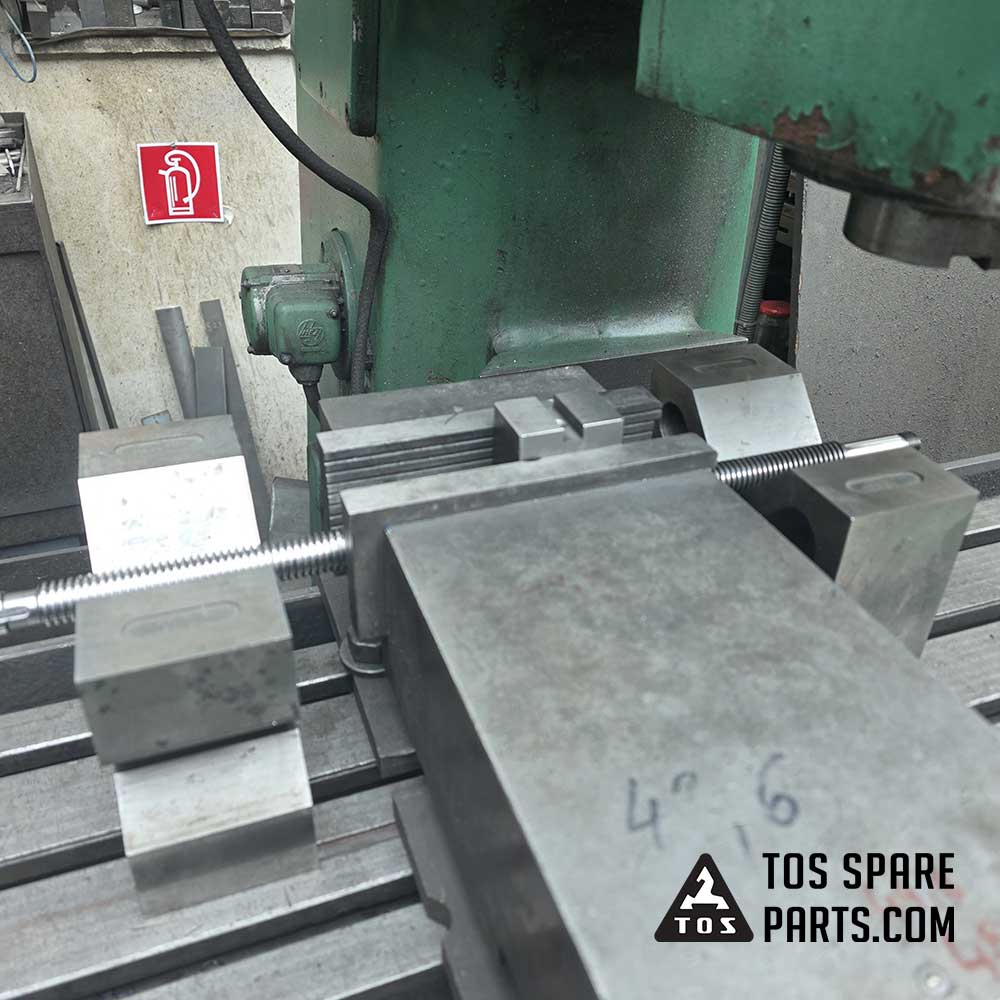
The nuts on our eshop are manufactured higher so the end user can adapt the nut to fit his or hers lathe. The user has to measure the height of his old nut against the screw (see value X on Figure 1) and mill it to size. It is important to clamp the nut correctly when milling it (see Figure 2) to achieve perpendicularity between the screw and the nut. If the top surface of the nut is not perpendicular to the screw, tension will be applied to the thread both of the screw and nut and both will wear much sooner.
Holes for screws
Note that the new nut does not have the threaded holes from the top side. This is because the nut needs to be adjusted correctly on the lathe in question. Only after the nut has been milled to size place the screw and nut into your carriage , align it, drill holes and make the threads. It is best to do this final operation onsite on your lathe.
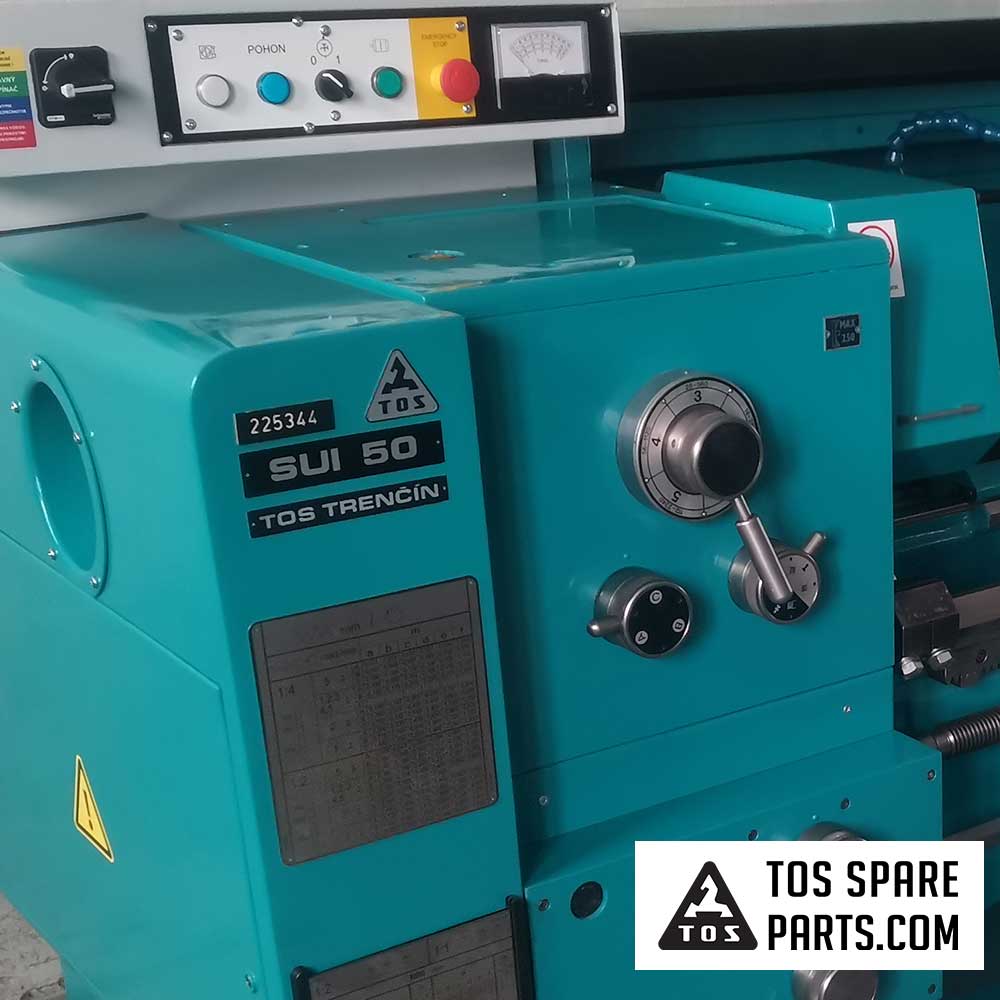
This example applies to the cross slide screw and nut for the SN50 lathe. This same exact principle applies to other TOS Trenčín / TRENS lathes such as SN32, SN40, SN45, SN55, SN63 SN71, SN400, SN500, SN630, SN710, SUI32, SUI40 and SUI50.
The same principle applies to the screw and nut of the tool slide.
Figure 1
Measuring the height of the nut.

Figure 2
Clamping of the nut.
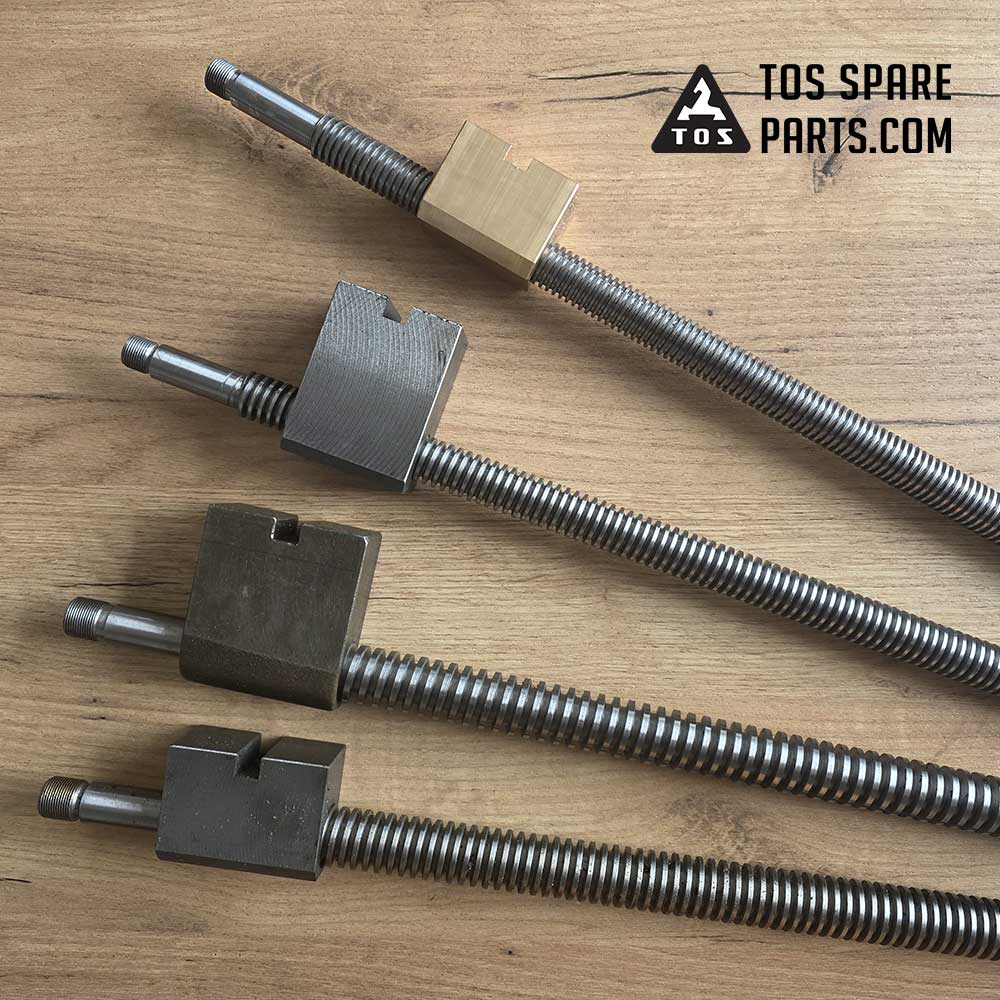
TOS Trenčín Cross Slide Screw and Nut Compatibility
Screw 704063 and nut 704061 – SN32 only
Screw 804129 and nut 804281 – SN40, SN45 and SN400
Screw 804129 and nut 804338 – SN50 and SN500
Screw 704196 and nut 704221 – SN55 only
Screw 704196 and nut 704321 – SN63, SN71, SN630 and SN710
Screw and nut 32 04 035 – SUI32 only
Screw 30 04 033 and nut 30 04 034 – SUI40 and SUI50
Please take notice if your lathe is metric or imperial, as the screws and nuts vary depending on that option.
See categories of spare parts
SN40-SN50
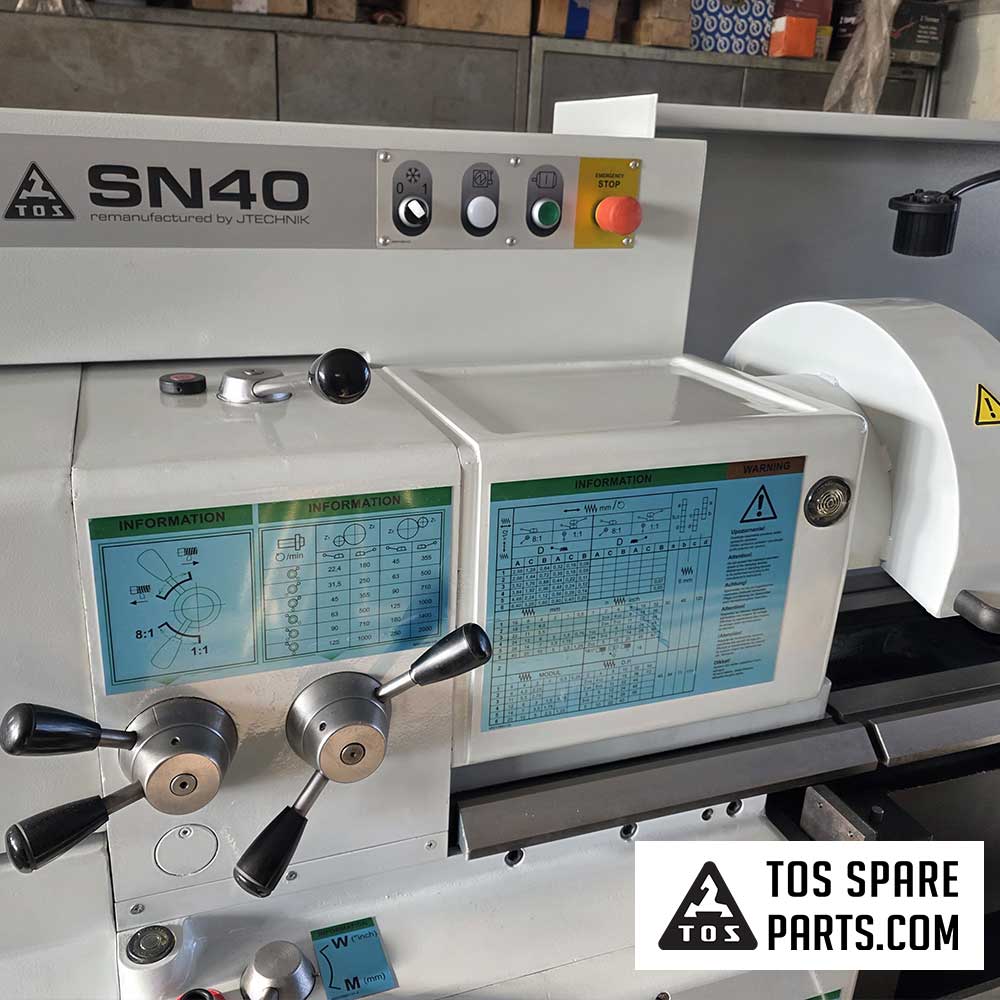
SN55-SN71
SN400-SN710
SUI40-SUI50